
FAQ’s
Table of Contents
At Bronco Fence in Kaysville, Utah, we see a number of common questions about fencing, railing, and more, and we are always ready to help. Here are some of the most common FAQs about fencing, railings, and more.
Materials Comparisons & Selection FAQ
What is the best fencing material for the Northern Utah climate?
For longevity in Utah, we recommend Vinyl or Trex Composite. Our high elevation means intense UV rays that can warp or dry out standard wood. Vinyl and Trex are engineered with UV inhibitors to maintain their color and structural integrity through 100-degree summers and sub-zero winters.
How does Trex fencing handle the high canyon winds in Kaysville and Layton?
Trex Seclusions® is the gold standard for high-wind areas. It features a unique interlocking picket system that creates a solid barrier while being laboratory-tested to withstand sustained winds of up to 130 MPH. This makes it the ideal choice for homes on the Kaysville and Layton benches.
What is the difference between “Professional-Grade” vinyl and “Big-Box Store” vinyl?
Professional-grade vinyl, like what we install at Bronco Fence, has a higher wall thickness (typically .135″ to .150″) and contains significantly more Titanium Dioxide (Ti02). This prevents the yellowing and brittleness often seen in cheaper retail products within 3-5 years.
Does Cedar really hold up better than other wood types?
Yes. Cedar contains natural oils that act as a preservative against rot and insects. In Utah’s arid climate, it resists “checking” (splitting) much better than pressure-treated pine or fir, though it still requires staining every 2-3 years for maximum life.
Is ornamental iron fencing prone to rust in Utah’s snow?
Not if it is treated correctly. We provide powder-coated ornamental aluminum and iron. Unlike traditional wet paint, powder coating creates a hard, non-porous finish that resists the corrosive effects of winter salt and melting snowpack.
Do you offer “privacy” options that aren’t just solid walls?
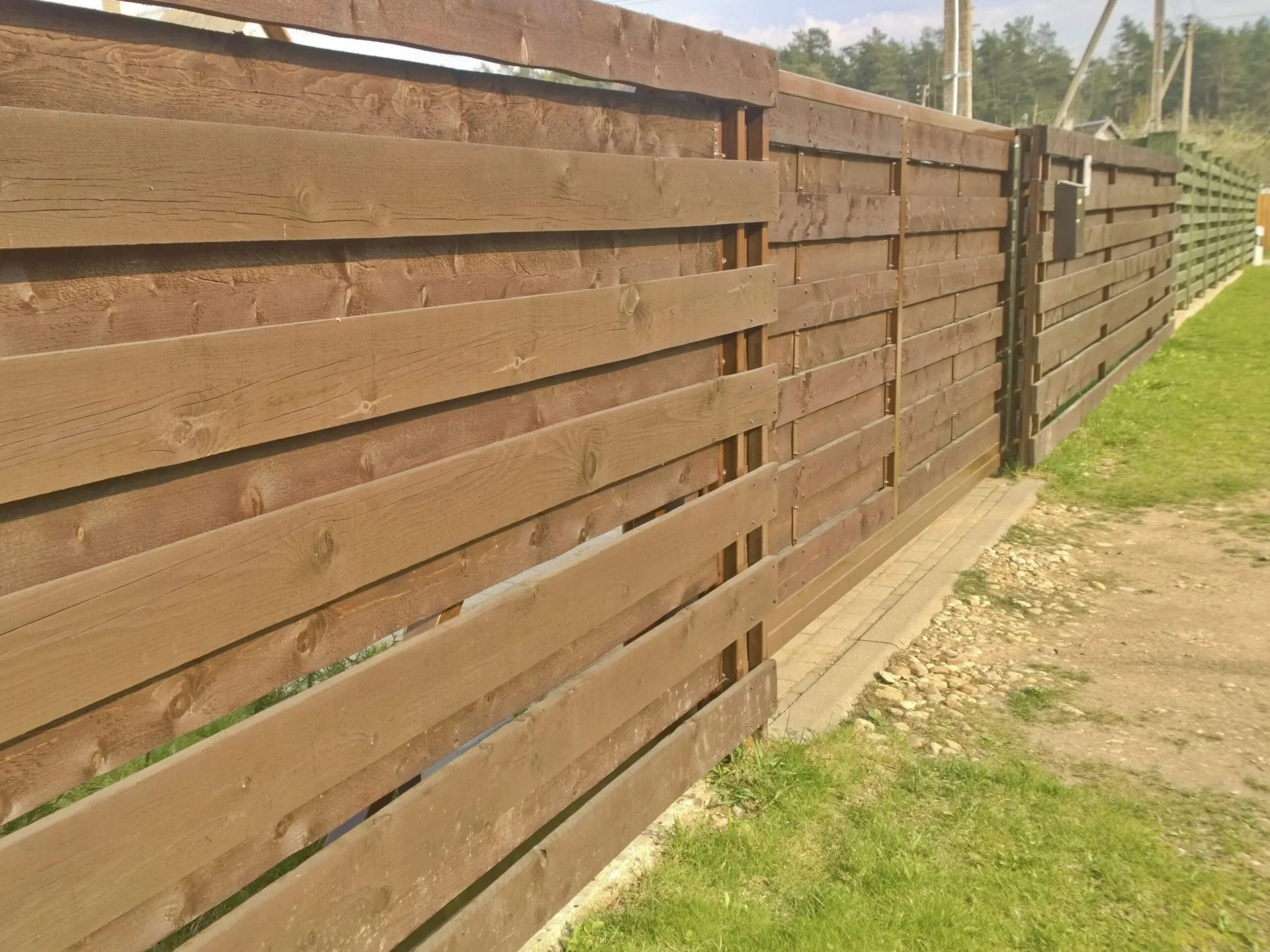
Yes. We offer semi-privacy vinyl, horizontal wood slats, and Trex designs that allow for airflow while obscuring the view into your yard. This is a great middle-ground for breezy areas in Davis County.
Technical Installation & Engineering FAQ
How deep do you set your fence posts?
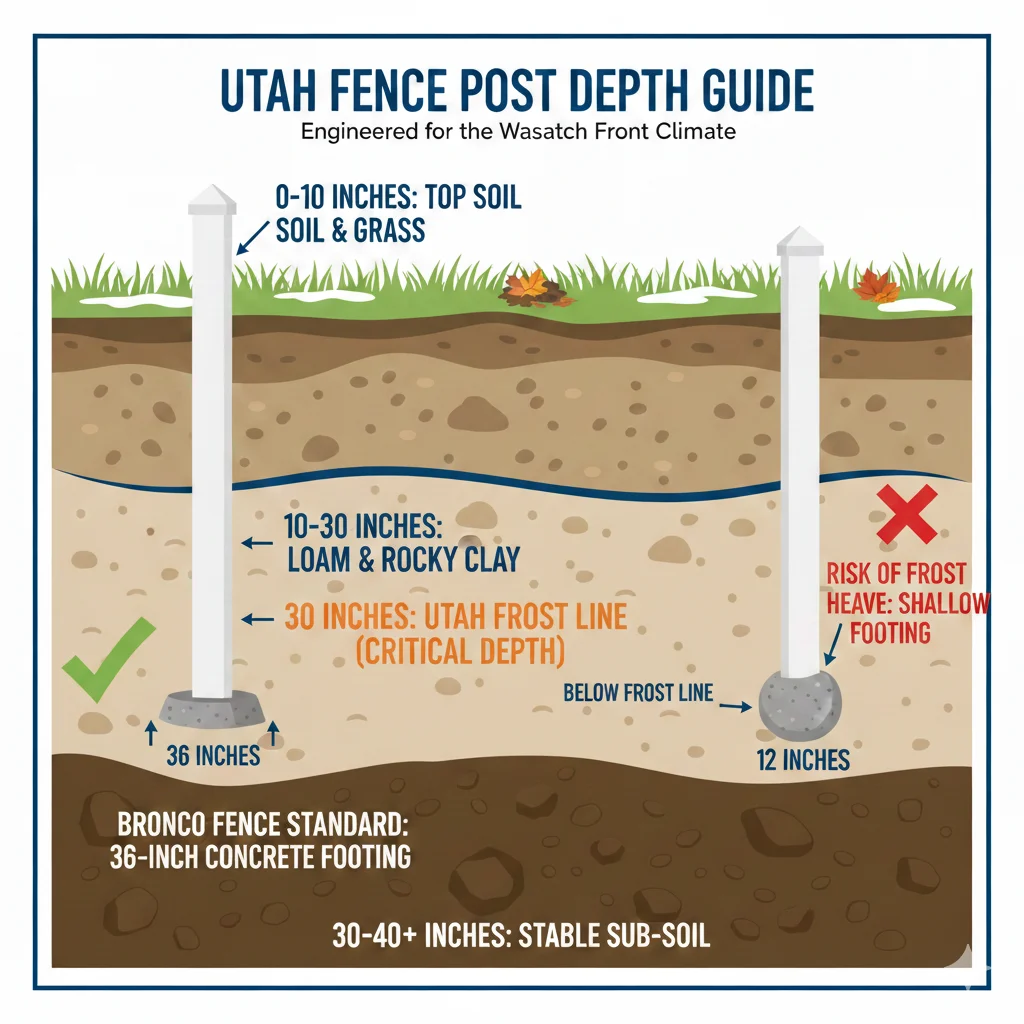
At Bronco Fence, we set posts at a minimum of 30 to 36 inches deep. This is critical because the Utah frost line can reach 30 inches; setting posts below this line prevents “frost heave,” which is when frozen ground physically pushes posts out of the soil.
Do you use concrete for every fence post?
Yes. We follow a “Quality Set in Concrete” standard. We use a high-strength wet-mix concrete for every post to ensure a permanent bond with the soil, rather than just tamping dirt or using dry-bag methods that can lead to leaning over time.
How do you handle installation on sloped yards or hillsides?
We use two primary methods: Stepping (where the fence looks like stairs) or Racking (where the fence follows the contour of the ground). Racking is generally preferred for pet owners in the Ogden foothills as it leaves no gaps at the bottom.
What happens if you hit a sprinkler line or utility?
Our installation checklist agreement says,” Every effort will be made to avoid sprinkler lines; however, this is not always possible. Bronco Fence is not responsible for damaged, or broken lines. The cost of repairing sprinkler lines will be borne by the customer. In some cases, it may be necessary to alter the design of your project to avoid potential repair costs.” We don’t repair the lines.
Can you install a fence during the Utah winter?
We can install fences as long as the ground isn’t frozen solid more than a foot deep. While winter installs may take slightly longer due to snow clearing, we can often keep projects moving year-round to ensure your yard is ready for spring.
Do you provide commercial-grade security fencing?
Absolutely. We provide high-security chain link with privacy slats, anti-climb ornamental iron, and automated gate operators for businesses across Weber and Davis Counties.
Local Regulations & Permitting FAQ
Do I need a permit for a 6-foot fence in Kaysville or Layton?
In most residential zones in Kaysville and Layton, a permit is not required for a backyard fence up to 6 feet tall. However, if you are on a corner lot or planning a front-yard fence, city “Sight Triangle” ordinances usually limit height to 3 or 4 feet.
Who is responsible for finding my property lines?
The property owner is legally responsible for identifying property pins. If pins are not visible, we highly recommend a professional land survey before installation to avoid costly boundary disputes with neighbors.
What are common HOA requirements I should check?
Many HOAs in Syracuse and West Point require specific colors (like Tan or Khaki vinyl) or specific materials (like Trex). We recommend getting written HOA approval before we begin the fabrication process.
Are there specific rules for fencing around a swimming pool?
Yes. Utah building codes generally require pool fences to be at least 48 inches tall with self-closing, self-latching gates. The gap at the bottom cannot exceed 4 inches.
Pricing, Warranty & Value FAQ
How much does a new fence cost per linear foot in Utah?
Pricing varies based on material. Generally, Wood/Cedar is the most affordable upfront, followed by Vinyl, then Trex Composite and Ornamental Iron at the higher end. We provide detailed, transparent bids to help you balance your budget with your goals.
Does Trex fencing pay for itself?
Yes, usually within 5 to 7 years. While it has a higher initial cost, you save thousands over the life of the fence by never having to pay for professional staining, sanding, or panel replacements.
What kind of warranty does Bronco Fence provide?
We offer a dual warranty: a Manufacturer’s Warranty on the material (which can be lifetime for vinyl) and a Labor Warranty on our installation. We stand behind our work long after the project is complete.
What does it mean to be “Gephardt Approved”?
It means we have passed a rigorous background check on our business practices, customer service history, and financial stability. It provides you with a $1,000 Consumer Guarantee and the peace of mind that you are working with a vetted professional.
Do you offer financing?
We frequently have financing partners available to help break large projects into manageable monthly payments. Ask your estimator for current options during your bid.
Gates & Other Products FAQ
How wide should my backyard gate be?
A standard pedestrian gate is 4 feet wide. If you plan on moving a riding lawnmower or a small trailer into the backyard, we recommend a double-drive gate (8 to 10 feet wide).
Can you automate an existing ornamental iron gate?
Often, yes. We can retro-fit many iron gates with solar or electric gate operators to provide keypad or remote entry for your driveway.
Do you install deck railings as well?
Yes! We offer vinyl and ornamental iron railing systems that meet all Utah safety codes for decks, porches, and balconies.
How do I get a free estimate?
Simply click the “Get a Bid” button on our site or call our office. We will schedule a time for an estimator to visit your property in Davis or Weber County, take measurements, and provide a no-obligation quote.
Areas We Serve
Box Elder County
Davis County
Morgan County
Weber County
Hear from our Satisfied customers


Get an Estimate
Answering More FAQs
If we didn’t cover a question that you have, you can always reach out to our team for more help. Members of our team can clear up any misconceptions you may have, making the installation of a new fence, rail, and more much easier. If there is a question we didn’t cover that you would like to discuss with our team before the installation of your new home upgrade, don’t hesitate to contact us today.